The ERP keeps what happened
Invoices, delivery notes, hours, ledger entries, stock. Everything that has already happened and has a number behind it. It looks backwards, and it does that very well.
pibiGestor, Frappe, the ERP you've always had
pibiCo · Gijón · sovereign AI for SMEs
VigilIA listens to what your company already says —calls, emails, WhatsApp voice notes, minutes— and pulls out of it who promised what, to whom, by when and for how much. Then it chases it until there is proof it is done. It doesn't ask you to write anything down. Only to stop losing things.
The problem
On any given Tuesday somebody says yes over the phone, hands full and the noise of the shop floor behind them. That sentence never reaches a system. It isn't in the ERP, because it isn't a ledger entry. It isn't in the CRM, because it isn't an opportunity. It isn't in the document manager, because nobody wrote it down.
It is in the head of a person who has another eleven things on today. And there it stays, until somebody rings up angry.
«Of course, you'll have it Thursday.»
Thursday came. The quote didn't. The customer asked somebody else and that somebody else is still their supplier.
Call · no record«I'll tell Marta myself to order it.»
Nobody told Marta. Marta had been off sick for a fortnight. The material reached the site nine days late.
Corridor · no recipient«We'll renew that in January without fail.»
It was renewed in April, with a surcharge, and with a machine standing idle in the meantime because the certificate had expired.
Meeting · no hard date«We agreed transport was included.»
There isn't a single email that says so. The same company ended up paying for it twice, and one of those two times was yours.
Verbal agreement · no evidenceNot one of these four sentences is anybody's fault. They are four failures of the system that should have caught them. That system did not exist.
Territory
Invoices, delivery notes, hours, ledger entries, stock. Everything that has already happened and has a number behind it. It looks backwards, and it does that very well.
pibiGestor, Frappe, the ERP you've always had
Contracts, reports, drawings, minutes, technical memoranda. Everything somebody took the trouble to write up. Excellent archive, dreadful alarm clock.
pibiDocs · Talk2Doc · ScriptorIA
What somebody said they were going to do and still hasn't done. The only one of the three that leaves no trace anywhere until it is already too late.
This product
What about a task manager?
On a shop floor, at half past seven in the morning, gloves on and a forklift waiting, nobody opens an app to type in a task. That is why Trello, Asana and Monday have spent fifteen years failing in industry: they don't fail on software, they fail on discipline, and discipline can't be bought. VigilIA starts from the opposite assumption: nobody is going to write anything down.
The consequence clock
A task list sorts by what you said was urgent on the day you wrote it. The clock sorts by what it is going to cost you.
The angle is time: today sits at the top and the hand sweeps clockwise towards the horizon you choose. The distance from the centre is the damage: the closer to the edge, the more expensive failing gets. Overdue work piles up in the red arc, just before twelve.
Tap a dot, hover over it or tab through with the keyboard
Demonstration data built on the pattern of a 34-person metalworking company in Asturias. No figure corresponds to a real customer.
How it works
You forward it the email. You send it the WhatsApp voice note. You photograph the whiteboard on your way out of the meeting. VigilIA takes whatever your company already produces and asks for absolutely nothing else.
From every source it pulls commitments: who, to whom, what, by when, for how much. And it keeps the exact sentence it worked them out from. No sentence, no commitment.
Every commitment carries with it what failing it costs: the penalty in the tender specification, the day of crane downtime, the grant that lapses, the customer who doesn't come back.
It chases through whatever channel that person actually answers on. Outsiders too —supplier, accountancy firm, customer—, who aren't going to install anything of yours, and don't need to.
It isn't closed with a click: it is closed with the signed delivery note, the photo of the installation or the email confirming acceptance. And that proof is kept in your repository, not in ours.
When somebody leaves, falls ill or takes three weeks off, their commitments don't go with them. They are reassigned with their whole context: where they came from, what had been promised and in what words.
Fifteen seconds
Where the data lives
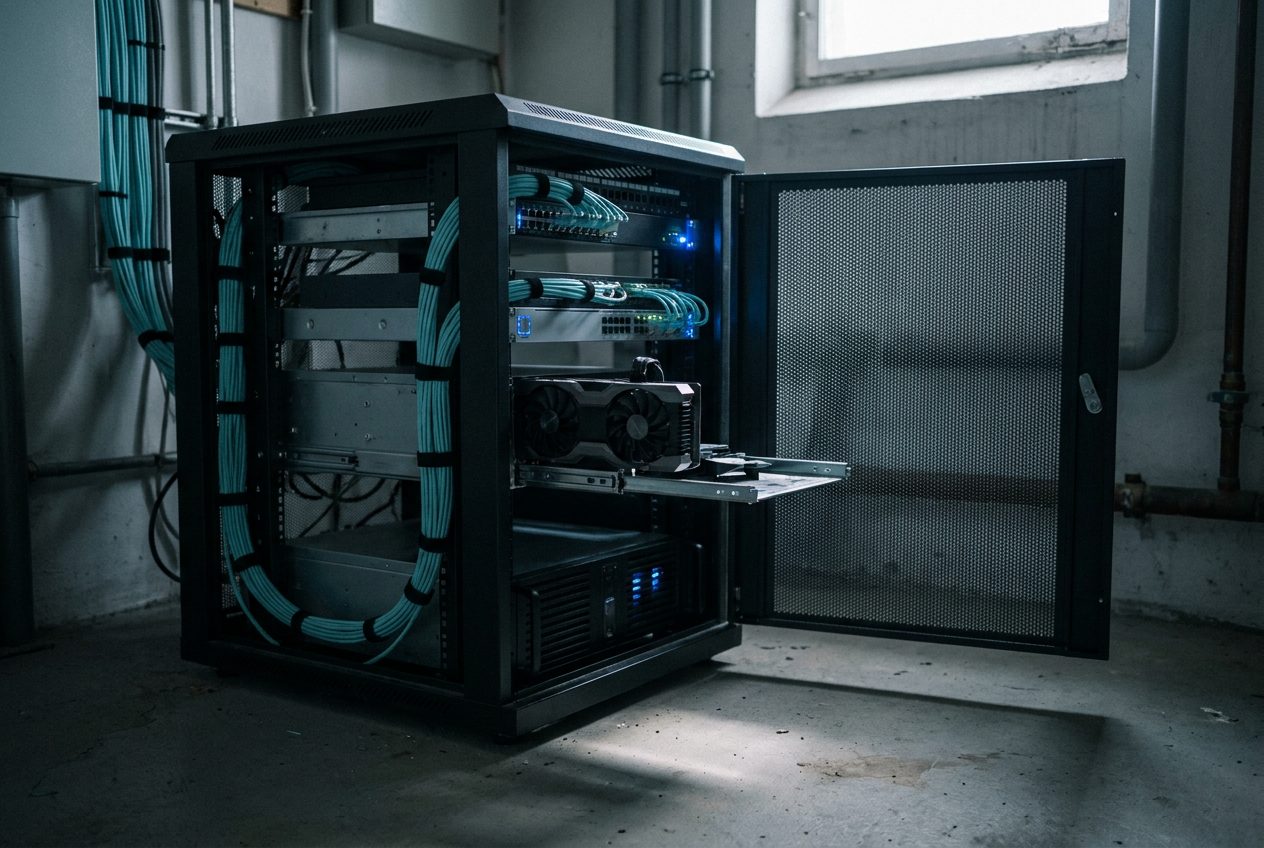
VigilIA listens to conversations, and a company's conversations carry margins, customer names, internal arguments, purchase prices and deadlines you would rather your competition did not know. That is why the language model runs under your own roof.
Eight weeks. One area. Thirty real commitments that today only one person remembers. If by the end of the pilot there is nothing VigilIA has saved, you tell us and we leave it there.